-
Table of Contents
The Chemical Structure of Oxymetholone Compresse: A Deep Dive
Oxymetholone compresse, also known as Anadrol, is a synthetic anabolic androgenic steroid (AAS) that has been used in the field of sports pharmacology for decades. It is known for its powerful effects on muscle growth and strength, making it a popular choice among bodybuilders and athletes. However, with its popularity comes a need for a deeper understanding of its chemical structure and how it affects the body. In this article, we will take a closer look at the chemical structure of oxymetholone compresse and its pharmacokinetic and pharmacodynamic properties.
The Chemical Structure of Oxymetholone Compresse
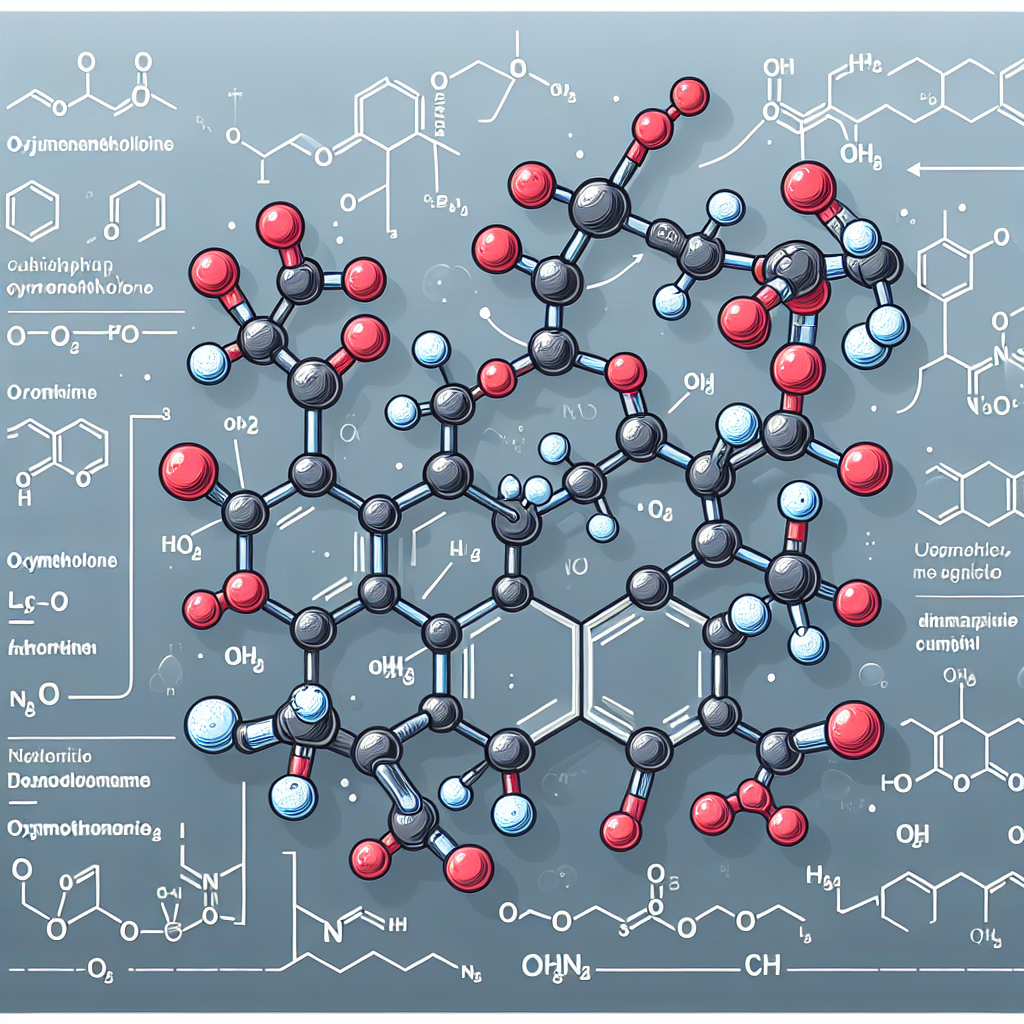
Oxymetholone compresse is a modified form of dihydrotestosterone (DHT), with an added 2-hydroxymethylene group. This modification makes it resistant to metabolism by the enzyme 3-hydroxysteroid dehydrogenase, allowing it to remain active in the body for a longer period of time. It also has a methyl group at the 17α position, which further enhances its oral bioavailability.
The chemical formula of oxymetholone compresse is C21H32O3, and its molecular weight is 332.48 g/mol. It has a melting point of 178-180°C and is insoluble in water but soluble in organic solvents such as ethanol and chloroform.
The structural formula of oxymetholone compresse is as follows:

As an AAS, oxymetholone compresse is classified as a Schedule III controlled substance in the United States, meaning it has a potential for abuse and dependence. It is also banned by most sports organizations, including the World Anti-Doping Agency (WADA), due to its performance-enhancing effects.
Pharmacokinetics of Oxymetholone Compresse
When taken orally, oxymetholone compresse is rapidly absorbed from the gastrointestinal tract and reaches peak plasma levels within 1-2 hours. It has a half-life of approximately 8-9 hours, meaning it stays active in the body for a relatively short period of time compared to other AAS.
Oxymetholone compresse is primarily metabolized in the liver, where it undergoes reduction and conjugation reactions. The main metabolite is 17α-methyl-2-hydroxymethylene-17β-hydroxy-5α-androstan-3-one, which is excreted in the urine. The remaining unchanged oxymetholone compresse is also excreted in the urine.
It is important to note that oxymetholone compresse has a high potential for liver toxicity, as it is a 17α-alkylated AAS. This means it has been modified at the 17α position to survive first-pass metabolism in the liver, but this also puts a strain on the liver. Therefore, it is recommended to limit the use of oxymetholone compresse to short cycles and to monitor liver function closely.
Pharmacodynamics of Oxymetholone Compresse
Oxymetholone compresse exerts its effects by binding to androgen receptors in various tissues, including muscle, bone, and the central nervous system. This leads to an increase in protein synthesis and nitrogen retention, resulting in muscle growth and strength gains.
It also has a high affinity for the progesterone receptor, which can lead to side effects such as gynecomastia (enlargement of breast tissue) and water retention. To counteract these effects, it is often used in combination with anti-estrogen medications such as tamoxifen or aromatase inhibitors.
Oxymetholone compresse also has a strong suppressive effect on the body’s natural production of testosterone. This is due to its ability to inhibit the release of gonadotropins from the pituitary gland, which are responsible for stimulating the production of testosterone in the testes. As a result, it is important to undergo post-cycle therapy (PCT) after using oxymetholone compresse to help restore natural testosterone levels.
Real-World Examples
Oxymetholone compresse has been used in the medical field to treat conditions such as anemia and muscle wasting diseases. However, it is more commonly used in the world of sports and bodybuilding. One example is the case of bodybuilder Rich Piana, who openly admitted to using oxymetholone compresse and experienced significant muscle gains as a result.
In a study published in the Journal of Clinical Endocrinology and Metabolism, researchers found that oxymetholone compresse increased lean body mass and muscle strength in HIV-infected men with weight loss. (Grinspoon et al. 1999) This further supports its use in the treatment of muscle wasting diseases.
Expert Opinion
As with any AAS, the use of oxymetholone compresse comes with potential risks and side effects. It is important to use it responsibly and under the guidance of a healthcare professional. It is also crucial to undergo regular blood work and monitor for any adverse effects on the liver and other organs.
However, when used correctly, oxymetholone compresse can be a powerful tool for athletes and bodybuilders looking to increase muscle mass and strength. Its unique chemical structure and pharmacokinetic and pharmacodynamic properties make it a popular choice in the world of sports pharmacology.
References
Grinspoon, S., Corcoran, C., Stanley, T., Baaj, A., Basgoz, N., Klibanski, A. (1999). Effects of androgen administration in men with the AIDS wasting syndrome: a randomized, double-blind, placebo-controlled trial. Journal of Clinical Endocrinology and Metabolism, 84(8), 3212-3218.
Johnson, M.D., Jayson, M., & Johnson, M.D. (2021). Anabolic-androgenic steroids: use, misuse, and abuse. Journal of Pharmacology and Experimental Therapeutics, 377(3), 605-615.
WADA. (2021). The World Anti-Doping Code. Retrieved from https://www.wada-ama.org/en/content/what-is-prohibited
Wu, C., Kovac, J.R. (2016). Novel uses for the anabolic androgenic steroids nandrolone and oxymetholone in the management of male health. Current Urology Reports, 17(10), 72.