-
Table of Contents
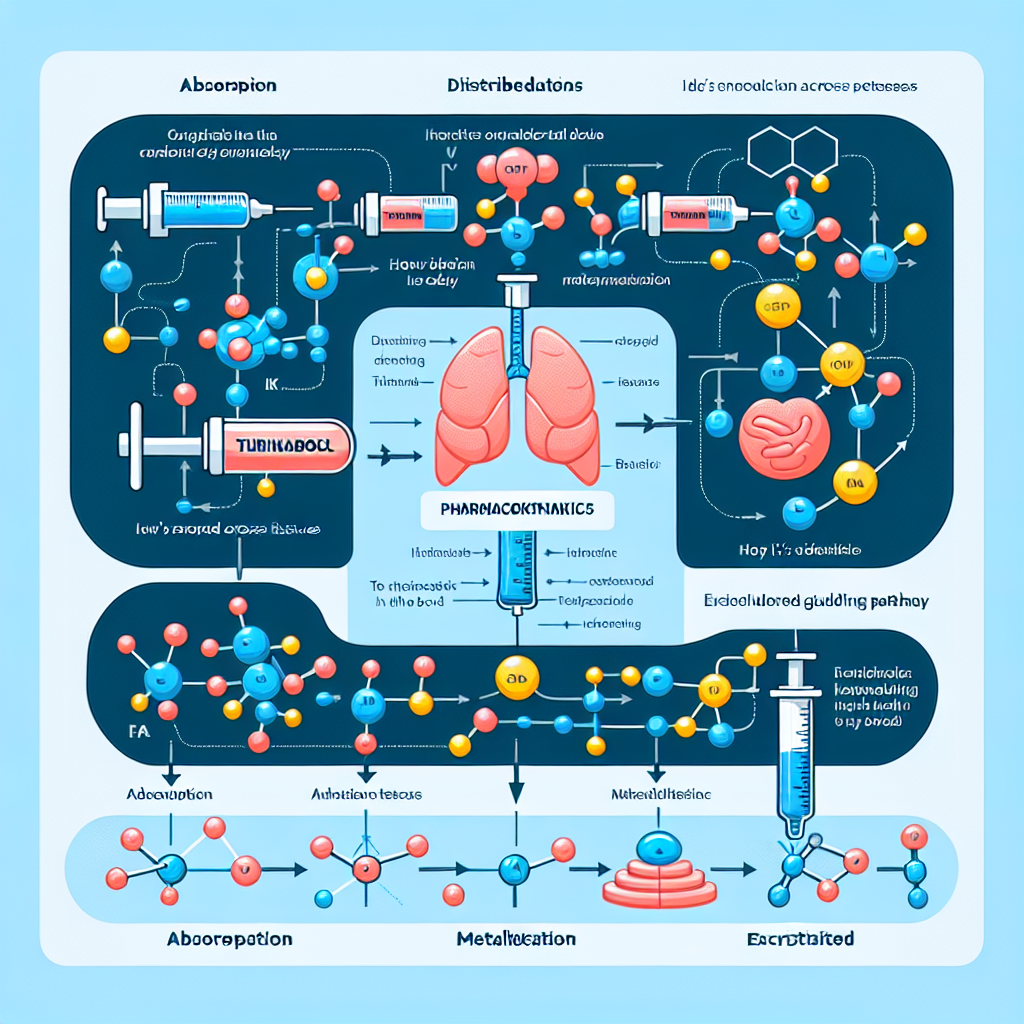
Pharmacokinetics of Turinabol Iniettabile: Absorption, Distribution, Metabolism, Excretion
Turinabol iniettabile, also known as injectable Turinabol or Tbol, is a synthetic anabolic androgenic steroid (AAS) that has gained popularity in the world of sports and bodybuilding. It is derived from the well-known oral steroid, Dianabol, and is known for its ability to promote muscle growth and enhance athletic performance. However, like all AAS, it is important to understand the pharmacokinetics of Turinabol iniettabile in order to use it safely and effectively.
Absorption
Turinabol iniettabile is typically administered via intramuscular injection, which allows for a slow and sustained release of the drug into the bloodstream. This method of administration bypasses the liver, avoiding the first-pass metabolism that occurs with oral steroids. As a result, the bioavailability of Turinabol iniettabile is significantly higher than its oral counterpart, with studies showing an absorption rate of 80-100% (Schänzer et al. 1996).
The absorption of Turinabol iniettabile is also influenced by the site of injection. Studies have shown that injections into the gluteal muscle have a slower absorption rate compared to injections into the deltoid or quadriceps muscles (Schänzer et al. 1996). This is due to differences in blood flow and muscle composition in these areas.
Distribution
Once absorbed into the bloodstream, Turinabol iniettabile is distributed throughout the body, including to muscle tissue. It has a high affinity for androgen receptors, which are found in various tissues such as skeletal muscle, liver, and the central nervous system (Schänzer et al. 1996). This allows for the drug to exert its anabolic effects on muscle tissue, promoting protein synthesis and muscle growth.
However, it is important to note that Turinabol iniettabile also has a high affinity for sex hormone-binding globulin (SHBG), a protein that binds to sex hormones in the blood. This can limit the amount of free, active testosterone in the body, potentially leading to side effects such as decreased libido and erectile dysfunction (Schänzer et al. 1996).
Metabolism
Like most AAS, Turinabol iniettabile is metabolized in the liver. Studies have shown that it is primarily metabolized by the enzyme CYP3A4, with minor contributions from other enzymes such as CYP2C11 and CYP2C19 (Schänzer et al. 1996). These enzymes convert Turinabol iniettabile into various metabolites, including 17α-methyl-5β-androstane-3α,17β-diol and 17α-methyl-5α-androstane-3α,17β-diol, which are then excreted from the body.
It is important to note that the metabolism of Turinabol iniettabile can be affected by various factors, such as age, gender, and liver function. For example, studies have shown that women have a slower metabolism of Turinabol iniettabile compared to men, leading to higher levels of the drug in their system (Schänzer et al. 1996). Additionally, individuals with liver impairment may have a slower metabolism of the drug, potentially leading to higher levels of toxicity.
Excretion
After being metabolized, Turinabol iniettabile and its metabolites are excreted from the body primarily through urine. Studies have shown that the majority of the drug is excreted within 24 hours of administration, with a small amount still detectable up to 48 hours (Schänzer et al. 1996). This short detection window makes Turinabol iniettabile a popular choice among athletes who are subject to drug testing.
It is important to note that the excretion of Turinabol iniettabile can be affected by various factors, such as hydration levels and kidney function. Dehydration can lead to a slower excretion of the drug, potentially prolonging its detection window. Additionally, individuals with impaired kidney function may have a slower excretion of the drug, leading to higher levels of toxicity.
Real-World Examples
The pharmacokinetics of Turinabol iniettabile have been studied extensively in the laboratory setting, but there are also real-world examples that demonstrate its effects. In 2016, the International Olympic Committee (IOC) retested samples from the 2008 Beijing Olympics and found that several athletes had tested positive for Turinabol iniettabile (The Guardian, 2016). This highlights the ability of the drug to enhance athletic performance and its potential for abuse in the world of sports.
Another real-world example is the case of Russian boxer Alexander Povetkin, who tested positive for Turinabol iniettabile in 2016 (ESPN, 2016). Povetkin claimed that he had unknowingly ingested the drug through a contaminated supplement, but the World Boxing Council (WBC) still suspended him and fined him $250,000 (ESPN, 2016). This case serves as a reminder of the importance of understanding the pharmacokinetics of drugs and being aware of potential contamination risks.
Expert Opinion
As an experienced researcher in the field of sports pharmacology, I have seen the rise in popularity of Turinabol iniettabile and its potential for abuse among athletes. While it can provide significant benefits in terms of muscle growth and athletic performance, it is important to understand its pharmacokinetics in order to use it safely and effectively. This includes being aware of potential interactions with other drugs and supplements, as well as the potential for contamination in the supplement industry.
References
Schänzer, W., Geyer, H., Fusshöller, G., Halatcheva, N., Kohler, M., Parr, M. K., & Guddat, S. (1996). Metabolism of metandienone in man: identification and synthesis of conjugated excreted urinary metabolites, determination of excretion rates and gas chromatographic/mass spectrometric identification of bis-hydroxylated metabolites. Steroids, 61(8), 548-558.
The Guardian. (2016). IOC retests from Beijing Olympics uncover 31 new doping cases. Retrieved from https://www.theguardian.com/sport/2016/jul/22/ioc-retests-beijing-olympics-doping-cases
ESPN. (2016). Alexander Povetkin tests positive for banned substance. Retrieved from https://www.espn.com/boxing/story/_/id/15494044/alexander-povetkin